
 by

Dubai’s real estate market records AED 15.6 billion in a single week
- August 12, 2026
- finance
Analyzing the Latest Figures:
Real Estate Market Trends and Projections
A single week. AED… Read More
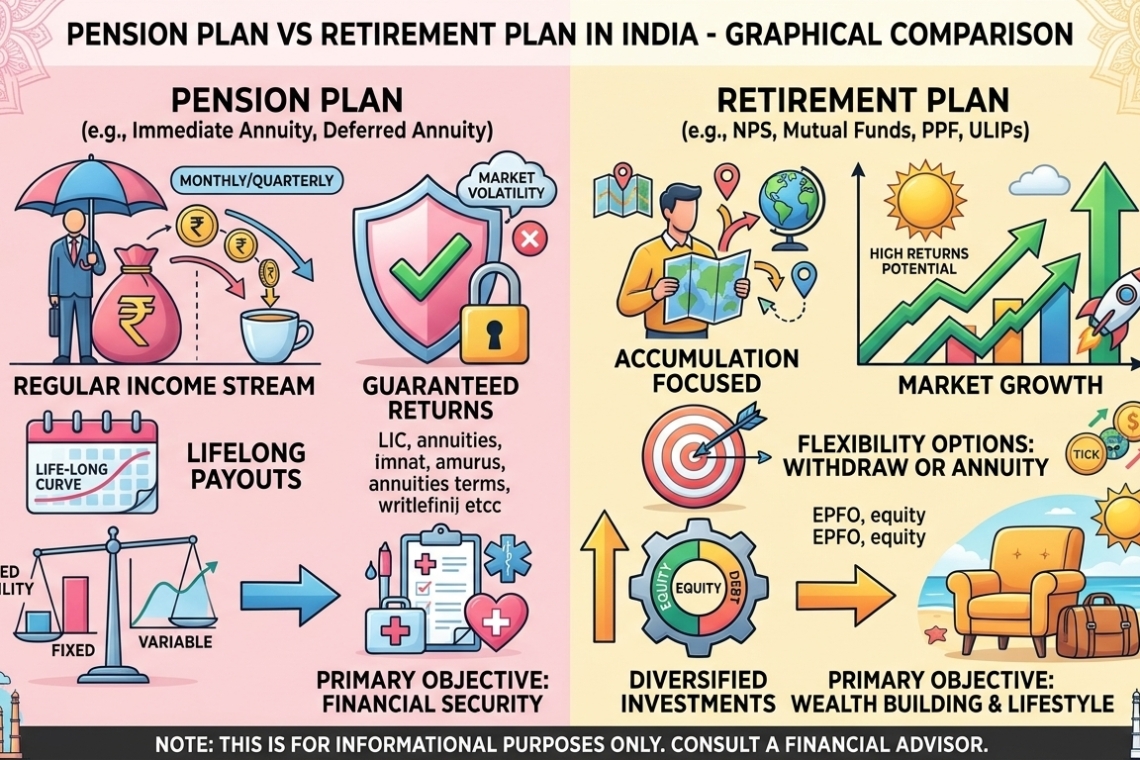
Planning for your life post-retirement is one of the most important financial decisions you can make. After working for decades, it is only fair that your retirement should be enjoyable, comfortable, and financially stable. When you begin your search, you will most probably come across the terms “pension plan” and “retirement plan” and wonder if they are the same. Although they seem to achieve similar goals, a pension plan and a retirement plan are very different and serve completely different purposes.
If you are searching for the best pension plan and best retirement plan in India, here is a brief guide to help you learn everything there is to know about retirement planning.
As the name suggests, a pension plan is a financial product that ensures that you get a regular income after retirement. It replaces your monthly income till the end of your life.
The most significant feature of a pension plan is that it guarantees you a regular income for your post-retirement life.
A retirement plan is a broad term that covers pension plans and any other financial product or strategy to ensure that you have adequate funds after you retire. Whereas a pension plan only focuses on providing an assured regular income, a retirement plan focuses on building a retirement corpus. It can either be a lump sum amount or a combination of regular income and a lump sum amount. It provides complete financial freedom that you can utilize as you see fit.
By investing regularly, you can build up a retirement corpus that gives you an option to buy insurance, meet large expenses like home renovation or vacation, or even set aside some money. You can choose to withdraw only a particular amount from the lump sum to invest and let the corpus grow to battle inflation.
If your income needs change as you age, you can withdraw a certain amount to purchase an annuity or any other financial product.
Here are a few essential factors that one should compare while looking for the best pension plan and the best retirement plan in India.
Taxation plays a significant role when selecting a retirement plan or a pension plan. Here are a few pointers to remember before finalizing your decision as per the new tax regime 2025.
Note: Tax laws are subject to change, and actual tax benefits depend on individual taxpayer circumstances and applicable tax regulations.
You do not have to choose one option over the other. One can invest in both a pension plan and a retirement plan. Here are a few things you should consider.
If you have a long-term investment horizon before retirement and can withstand market risk, a retirement plan corpus may be the best choice to create a larger retirement corpus.
Always go through the policy document thoroughly. Eligibility, charges, payout, surrender values, and other terms are subject to the policies as issued by the respective insurance companies.
Selecting the best pension plan and best retirement plan in India based on your requirements can be a challenging task. A pension plan versus a retirement plan is a hot topic because the two options serve completely different purposes. A pension plan provides regular income for your post-retirement life, whereas a retirement plan provides a lump sum corpus that you can utilize as you see fit. By understanding your needs, requirements at the time of retirement, and financial capabilities, you can make the right choice today and enjoy a happy retirement tomorrow.



Planning for your life post-retirement is... Read More
Soft voices mix with the sound... Read More

Choosing a game gives a Twitch... Read More

The fragrance industry has experienced a... Read More

With a little bit of careful... Read More

Guwahati to Kolkata is a short... Read More

Analyzing the Latest Figures: Real Estate... Read More

Booking a bus online looks easy... Read More

Introduction Geographic boundaries no longer restrict... Read More

A fund linked to the NIFTY... Read More

Air travel is experiencing steady growth... Read More

Cloud applications move fast. Faster releases,... Read More

In the quest for holistic health... Read More

As people age, maintaining good health... Read More

There’s something truly magical about spending... Read More

Introduction Planning for your post-retirement life... Read More

For years, holidaymakers have faced a... Read More