
 by
by 

How to Plan a Same-Day Business Trip from Delhi to Pune
- September 2, 2026
- Travel
With a little bit of careful planning, a business trip between Delhi and Pune can often be arranged for one… Read More

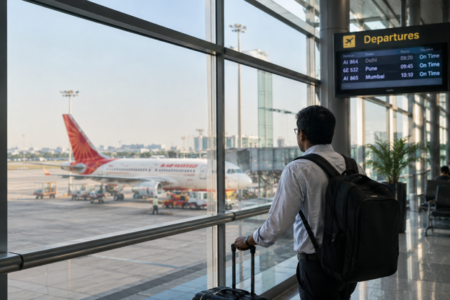
Air travel is experiencing steady growth as increasing numbers of people take to the skies for work, vacations, education, and family commitments. With passenger traffic reaching new highs in many regions, airports face mounting pressure to accommodate larger crowds while maintaining smooth operations. To keep pace with this surge, airport authorities are investing in modern solutions that improve efficiency, expand capacity, and enhance the traveler experience.
Today’s airports are evolving into highly sophisticated transportation hubs. Rather than simply serving as departure and arrival points, they are becoming technology-driven environments designed to manage growing demand while delivering greater convenience. Through strategic planning, infrastructure improvements, and operational innovation, airports are positioning themselves to meet the needs of both current and future travelers.
One of the primary ways airports are responding to increased passenger numbers is by expanding their physical footprint. Around the world, major airports are constructing additional terminals, adding gates, and extending runways to accommodate more flights and travelers. These projects help reduce crowding and improve the overall flow of airport operations.
Large-scale airport development initiatives often represent significant long-term investments. Although expansion projects can take years to complete, they are necessary for supporting regional economic activity and ensuring transportation systems remain efficient. Without continued infrastructure improvements, airports risk becoming overwhelmed by growing passenger volumes.
Modern airport design also emphasizes adaptability. New terminals and operational spaces are frequently created with future expansion in mind, allowing airports to respond more easily to shifts in travel demand, airline operations, and passenger expectations.
Technology has become an essential component of airport modernization efforts. As passenger traffic increases, airports are implementing digital tools that help move travelers through the facility faster and more efficiently while reducing pressure on staff and resources.
Automated check-in systems, self-service baggage processing, and electronic border control technologies are becoming increasingly common. These solutions allow travelers to complete routine procedures with minimal wait times, helping reduce congestion throughout the terminal.
Data-driven technologies are also improving operational decision-making. Airports can use artificial intelligence and advanced analytics to forecast passenger traffic, identify peak travel periods, and allocate personnel more effectively. By understanding travel patterns in greater detail, operators can make adjustments that improve efficiency and enhance customer service.
Passenger expectations continue to evolve, and airports recognize that the travel experience extends beyond reaching a destination. Today’s travelers often seek environments that offer comfort, convenience, and a variety of useful services during their time at the airport.
To meet these expectations, many facilities are introducing enhanced amenities such as upgraded waiting areas, expanded dining selections, premium lounges, and dedicated workspaces for business travelers. Family-oriented services, wellness facilities, and relaxation zones are also becoming more common as airports strive to serve a diverse range of visitors.
Mobile technology plays an important role in improving the traveler experience as well. Airport applications provide passengers with real-time flight information, terminal maps, gate updates, and other helpful resources that simplify navigation and reduce uncertainty during travel.
As passenger demand rises, airports must work closely with airlines, maintenance organizations, and other aviation partners to ensure that operations remain efficient. Increased traffic often results in more flight departures, larger aircraft, and additional logistical requirements that demand careful coordination.
Reliable aviation support services are essential for maintaining consistent operations. Organizations connected to Pilot John International contribute to the industry by supplying equipment, parts, and resources that help keep aircraft operational and airports functioning effectively. Access to dependable aviation products supports the broader transportation network and helps airports manage growing demand with confidence.
Strong collaboration among airports, airlines, suppliers, and service providers creates a more resilient operational environment. These partnerships help ensure that travelers receive reliable service even as the aviation industry continues to expand.
The future of air travel will likely be shaped by emerging technologies and evolving passenger expectations. Airports are increasingly exploring solutions such as biometric screening, smart infrastructure systems, autonomous transportation technologies, and enhanced digital platforms that can further improve efficiency and convenience.
Investments in innovation allow airports to remain competitive in a rapidly changing industry. By adopting scalable technologies and building adaptable systems, airport operators can better prepare for future growth while maintaining high service standards.
Forward-looking airports recognize that success involves more than increasing capacity. It requires creating environments that are resilient, responsive, and capable of delivering a seamless travel experience in an increasingly connected world.
Airports are taking proactive steps to address growing travel demand through facility expansions, advanced technologies, improved passenger services, and stronger operational partnerships. These efforts help ensure that increasing numbers of travelers can move through airports safely, efficiently, and comfortably.
As air travel continues to grow, airports will remain vital components of the global transportation network. Their ability to adapt, innovate, and invest in future-ready solutions will play a key role in supporting economic development, connecting people across the world, and delivering better travel experiences for generations to come.


Choosing a game gives a Twitch... Read More

The fragrance industry has experienced a... Read More

With a little bit of careful... Read More

Guwahati to Kolkata is a short... Read More

Analyzing the Latest Figures: Real Estate... Read More

Booking a bus online looks easy... Read More

Introduction Geographic boundaries no longer restrict... Read More

A fund linked to the NIFTY... Read More

Air travel is experiencing steady growth... Read More

Cloud applications move fast. Faster releases,... Read More

In the quest for holistic health... Read More

As people age, maintaining good health... Read More

There’s something truly magical about spending... Read More

Introduction Planning for your post-retirement life... Read More

For years, holidaymakers have faced a... Read More

Modern travelers are increasingly looking for... Read More

Char Dham Yatra by helicopter is... Read More